Livartzi
The verdant village of Achaia
Erymanthos · 828m altitude · Peloponnese
A village
lost in the green
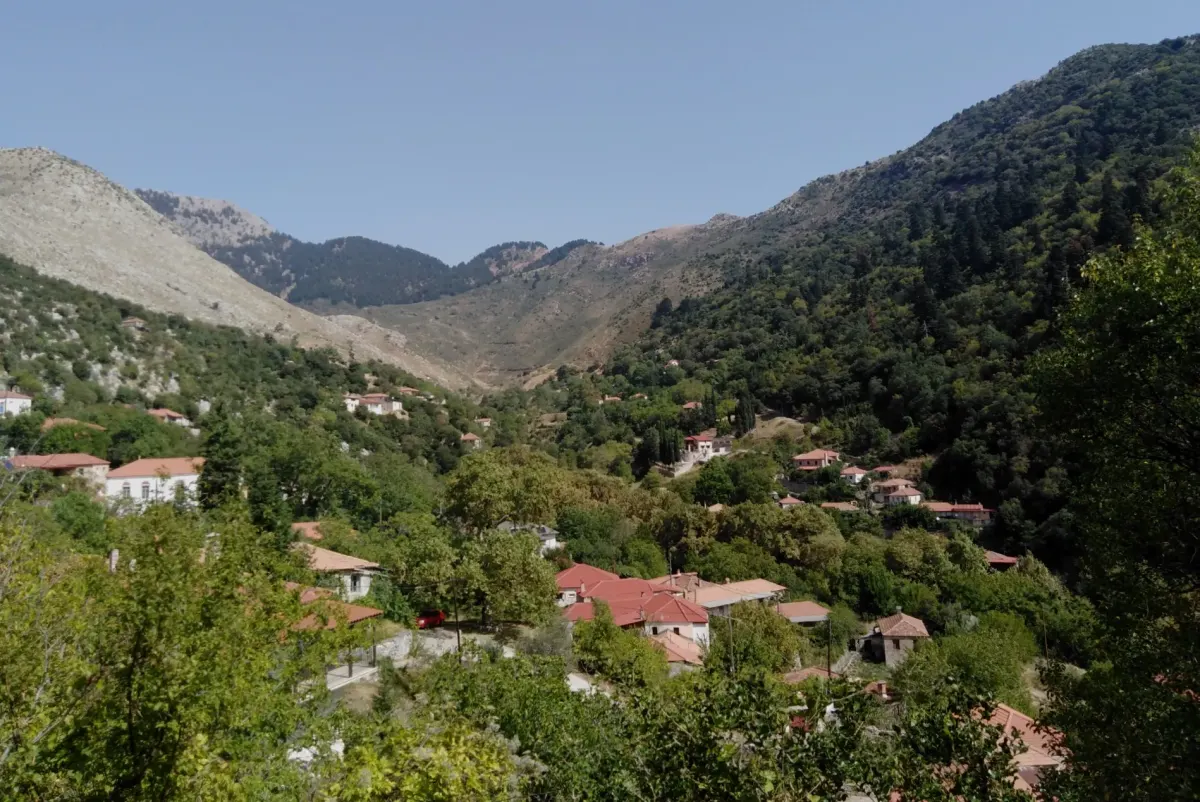
On the southern slopes of Mount Erymanthos, hidden among dense forests of plane trees, walnuts, and chestnuts, Livartzi breathes five centuries of history. A village born before the Ottoman occupation, it grew with settlers from Mystras and played a central role in the Revolution of 1821.
Altitude
First record
Churches
Neighborhoods


Five centuries of
living history
Livartzi existed before the Ottomans reached the Peloponnese — one of the few villages that was never fully subjugated. After the fall of Byzantium, settlers from Mystras arrived and the village flourished.
On March 14, 1821, Xantakis Tomaras killed the Ottoman tax collector from the Tomara Tower, signaling the start of the Revolution in the region. The tower still stands, a silent witness to that night.
In the 19th century, the village had nearly 3,000 inhabitants and served as the capital of the Municipality of Psofida. Tower houses, water mills, and tobacco factories testified to a thriving community.
Where the forests
meet the sky
Plane trees, walnuts, chestnuts, and firs blanket the slopes of Erymanthos. The Livartzinos River flows through artificial cascades, while stone fountains with crystal-clear water refresh every corner of the village.
Springs & Fountains
Dozens of natural springs feed stone fountains in every neighborhood, a centuries-old heritage that continues to offer cool, crystal-clear water.
Dense Forests
Plane trees, walnuts, chestnuts, and firs create a dense, lush landscape that justifies its title as the 'verdant village'.
Livartzinos River
Fed by the Erymanthos watershed, the Livartzinos River runs through the valley with artificial cascades and natural pools.
What to discover
Holy Trinity Monastery
Founded in 1599, relocated to its current site in 1698. It housed an upper school from 1707. The spiritual beacon of the village.
Tomara Tower
Here, on March 14, 1821, the Revolution began in the region. Xantakis Tomaras gave the signal for the uprising from this tower.
Folklore Museum
Housed in the 1856 schoolhouse. Traditional textiles, local costumes, and period room reconstructions bring the past to life.
13 Historic Churches
From the 16th to the 19th century, 13 churches were built in Livartzi. St. John the Baptist (1842) hides a spring beneath its foundations.
The Square
The central square with its centuries-old plane trees remains the heart of the village. Cafes and tavernas serve local flavors under the shade.
The Burning of 'NO'
Every October 28th, young people climb to the highest point, carve a giant 'NO' and illuminate it at dusk, while the church bells ring.
Come and
discover
Livartzi is located on the road to Kalavrita, at an altitude of 828 meters, just 8 kilometers from ancient Psofida. An ideal base for hiking on Erymanthos and visiting the Kalavrita Ski Center.
Location
Municipality of Kalavrita, Achaia, Peloponnese
Altitude
828 meters
Best season
Spring & Autumn — ideal for hiking